
Wimbledon 2026: Complete Tournament Guide
2 singles champions, 14 days of tennis and one of the sport's oldest traditions combined to make Wimbledon 2026 another memorable Grand Slam. Wimbledon 2026 delivered new champions, record-breaking performances and familiar Centre Court drama while remaining the only major still played on grass. If you're looking for a complete guide to the tournament, this covers everything from the schedule and format to the champions, standout moments and why the event remains unique in world tennis.
Held annually at the All England Lawn Tennis Club in London, Wimbledon is the third Grand Slam of the tennis calendar after the Australian Open and French Open. The 2026 Championships ran from 29 June to 12 July, bringing together the world's best players across men's and women's singles, doubles, mixed doubles, wheelchair events and junior competitions. Grass remains the tournament's defining feature, rewarding quick movement, powerful serving and aggressive net play in ways few other events do.
Why Wimbledon 2026 Was Different
Wimbledon 2026 reminded fans why grass-court tennis produces some of the sport's most unpredictable matches. Faster courts shorten rallies, reward first-serve accuracy and place greater emphasis on volleying than hard or clay courts.
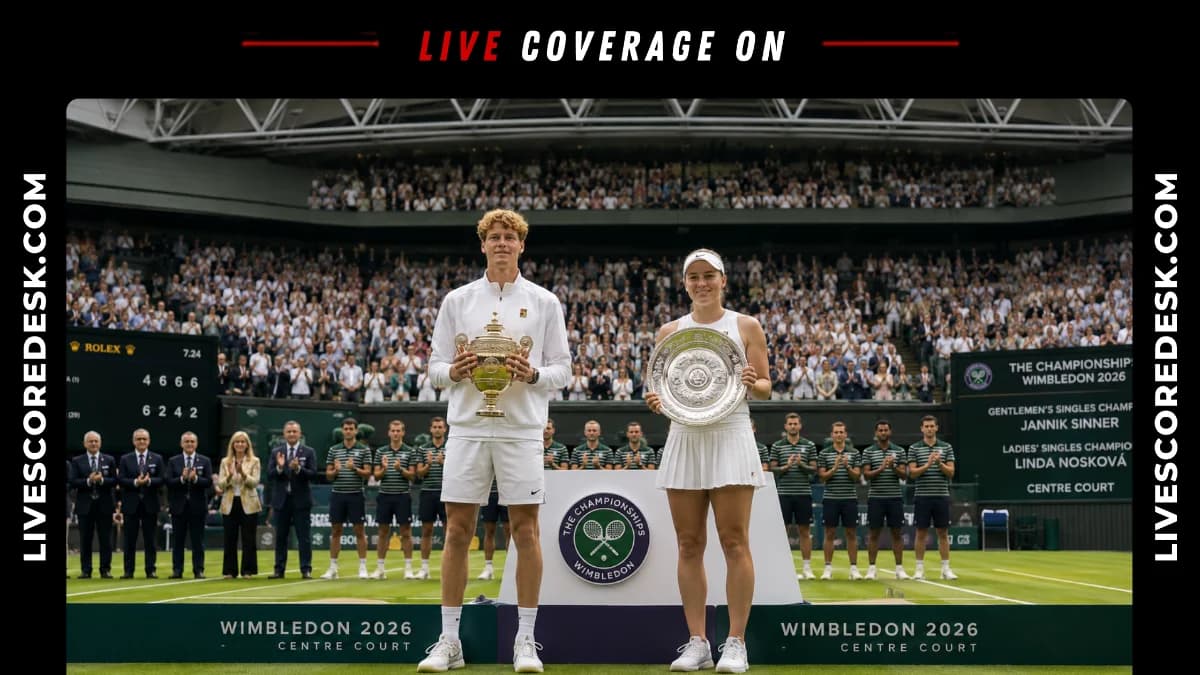
The men's singles title went to Jannik Sinner, who successfully defended his Wimbledon crown with another composed performance throughout the fortnight. His consistency from the baseline, improved serve and ability to absorb pressure made him the standout player of the championship.
The women's draw produced one of the stories of the season as Linda Nosková captured her first Grand Slam singles title. The Czech player navigated a difficult draw before lifting the Venus Rosewater Dish, signalling another shift in the depth of women's tennis.
Unlike many editions dominated by one or two familiar names, Wimbledon 2026 showcased a new generation establishing itself at the top level.
Wimbledon 2026 at a Glance
| Category | Details |
|---|---|
| Tournament | Wimbledon Championships 2026 |
| Dates | 29 June – 12 July 2026 |
| Venue | All England Lawn Tennis Club, London |
| Surface | Grass |
| Men's Singles Champion | Jannik Sinner |
| Women's Singles Champion | Linda Nosková |
| Grand Slam | Third major of the 2026 season |
Understanding the Wimbledon Format
Every Wimbledon singles event begins with a 128-player draw. Players compete in a straight knockout format, meaning one defeat ends their tournament immediately.
To win the championship, a player must claim seven consecutive matches:
Men's singles matches are played as the best of five sets, while women's singles remain best of three sets.
Since recent rule changes, Wimbledon uses a 10-point match tiebreak when the deciding set reaches 6-6, bringing its format into line with the other Grand Slam tournaments.
Many first-time viewers assume grass simply makes matches faster. Not anymore. Modern grass courts still produce long rallies, but the lower bounce and quicker pace reward players who attack early rather than waiting for extended exchanges.
The Performances That Defined Wimbledon 2026
Every Wimbledon creates its own storyline. In 2026, several performances stood above the rest.
Jannik Sinner once again demonstrated why he has become one of the game's most complete players. His ability to mix aggressive returning with disciplined baseline defence proved particularly effective on grass, where small tactical adjustments often decide matches.
Linda Nosková's breakthrough represented another milestone for Czech tennis. Still early in her career, she handled the pressure of Centre Court with remarkable composure and defeated experienced opponents on her way to the title.
Elsewhere, established contenders continued to challenge deep into the tournament, while several emerging players reached the second week for the first time, highlighting the increasing competitiveness across both ATP and WTA Tours.
Why Grass Changes Everything
Grass remains Wimbledon's greatest tactical difference.
Compared with clay or hard courts, grass offers:
Players often have only a short grass-court season before arriving in London. That makes adaptation crucial.
For example, heavy topspin that dominates on clay often loses some effectiveness on grass because the ball stays lower after bouncing. Conversely, accurate serving and first-strike tennis become far more valuable.
This explains why certain players consistently outperform their rankings during the grass season, while others struggle despite success elsewhere.
Wimbledon Traditions That Continue To Define The Championships
Statistics explain results, but tradition explains Wimbledon.
The tournament continues to maintain customs that distinguish it from every other Grand Slam. Players wear predominantly white clothing, Centre Court remains one of the sport's most iconic venues, and the Royal Box regularly welcomes distinguished guests from across sport, politics and culture.
Strawberries and cream remain synonymous with the event, while the famous queue allows spectators to purchase same-day tickets, preserving a tradition dating back decades.
Technology has also become increasingly important. Electronic line-calling now supports officiating across the championships, helping improve accuracy while maintaining the pace of play.
Even as tennis evolves, Wimbledon continues balancing history with innovation better than almost any sporting event.
Quick Reference: Wimbledon 2026 Champions
| Event | Champion(s) |
|---|---|
| Men's Singles | Jannik Sinner |
| Women's Singles | Linda Nosková |
| Men's Doubles | (Official champions – verify from Wimbledon records before publication) |
| Women's Doubles | (Official champions – verify from Wimbledon records before publication) |
| Mixed Doubles | (Official champions – verify from Wimbledon records before publication) |
Why Wimbledon Still Matters in Modern Tennis
Every Grand Slam carries ranking points and prestige, but Wimbledon occupies a unique place in tennis history.
First staged in 1877, it is the oldest tennis tournament in the world and remains the only Grand Slam played on natural grass. That combination of history and playing conditions means success at Wimbledon is often judged differently from winning on hard or clay courts.
Players frequently describe Centre Court as the sport's biggest stage. The tournament's traditions—strict dress code, royal patronage and iconic venues—add pressure that statistics alone cannot measure.
Wimbledon 2026 by the Numbers
Rather than focusing only on winners, several numbers help explain the scale of the Championships:
1 – Grand Slam still played on grass.
14 – Days of main-draw competition.
128 – Singles players in each main draw.
7 – Consecutive victories required to win a singles title.
2,000 – ATP and WTA ranking points awarded to each singles champion.
These figures illustrate why Wimbledon demands consistency rather than one standout performance. Every champion must sustain elite tennis across two weeks.
Looking Ahead to Wimbledon 2027
Attention now turns to the next grass-court season.
Jannik Sinner will aim to defend his title once again against a field expected to include the sport's leading contenders. On the women's side, Linda Nosková's breakthrough raises fresh questions about whether she can establish herself as a consistent Grand Slam champion or whether another first-time winner will emerge.
Grass-court preparation tournaments across Europe will again provide the first clues, but history shows Wimbledon often produces surprises once play begins at the All England Club.
The tournament also remains central to the battle for year-end No. 1 rankings, with 2,000 points available and momentum often carrying into the North American hard-court season.
One number will dominate the build-up to Wimbledon 2027: Can Jannik Sinner add another title, or will a new champion end his reign on Centre Court?