
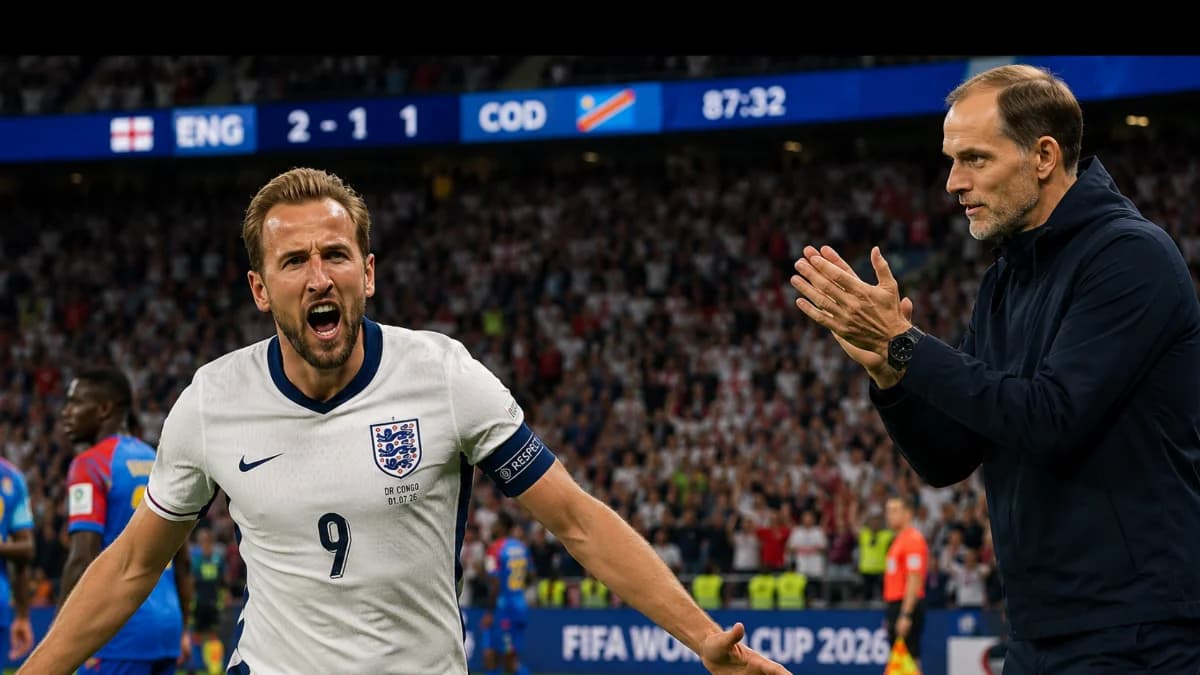
Harry Kane's Different World Cup: Why England's Captain Looks Built for 2026
61 goals in 51 matches for Bayern Munich was the platform. But it's Harry Kane's movement, fitness and role within Thomas Tuchel's England that has turned this World Cup into a different story altogether.
After years of carrying England's hopes, Kane has arrived in North America looking sharper than at any previous major tournament. The debate isn't whether he's still England's best striker. It's whether this is finally the tournament where his complete game, rather than just his finishing, can carry England to the trophy that has always eluded both player and country.
That conversation has intensified after England's dramatic comeback victory over DR Congo in the Round of 32. Kane scored twice in the closing stages to overturn a one-goal deficit, sending England into the last 16 while taking his tournament tally to five goals. He also moved beyond Pelé on the men's World Cup all-time scoring list with his 13th tournament goal, another reminder that his legacy is still growing.
Why Harry Kane Has Become England's Biggest Difference
The biggest change isn't simply the goals.
Kane looks fresher. His movement is more varied, and England's attacking structure has evolved around him. Under Tuchel, runners such as Anthony Gordon and Marcus Rashford stretch defensive lines, allowing Kane to drift into deeper areas before arriving inside the penalty box at precisely the right moment. It's a pattern that mirrors his role at Bayern Munich and maximises both his passing range and finishing ability.
"Harry is in an amazing state of mind, physically as well. He is hungry to go all the way this World Cup and he's not satisfied."
— Thomas Tuchel
Why Fitness and Tactics Matter More Than Ever
The counter-argument has always centred on Kane's workload.
At 32, questions surrounded whether another long domestic season would leave him fatigued by June. Instead, Tuchel and Bayern have carefully managed his role, while England's squad now offers genuine attacking support that prevents Kane carrying every creative responsibility himself.
Gary Neville has argued that England's squad has effectively been constructed around Kane's strengths. Rather than asking him to constantly run behind defenders, England now uses pace around him, allowing Kane to dictate attacks before arriving in scoring positions.
That tactical evolution resembles the partnerships he developed at Bayern. The striker still drops into midfield, but the surrounding movement has become faster and more purposeful.
History also supports the optimism.
Kane won the Golden Boot at the 2018 World Cup after making a rapid scoring start. In Qatar four years later, he never found the same rhythm. This summer feels much closer to Russia than Qatar, only with a more complete version of the England captain.
The Next Test Will Show Whether This Really Is Different
England now face co-hosts Mexico in the Round of 16, arguably their toughest assignment of the tournament so far. The atmosphere at the Azteca Stadium and the challenge posed by the hosts will provide another measure of Kane's influence.
If England progress again, the discussion may no longer be about whether Kane belongs among England's greatest players. That argument is largely settled. Instead, attention will shift to whether this version of Kane can finally lead England to the world title that has remained out of reach since 1966.
One number will define the next chapter: can Harry Kane increase his World Cup tally from 13 and keep England moving towards the final?