
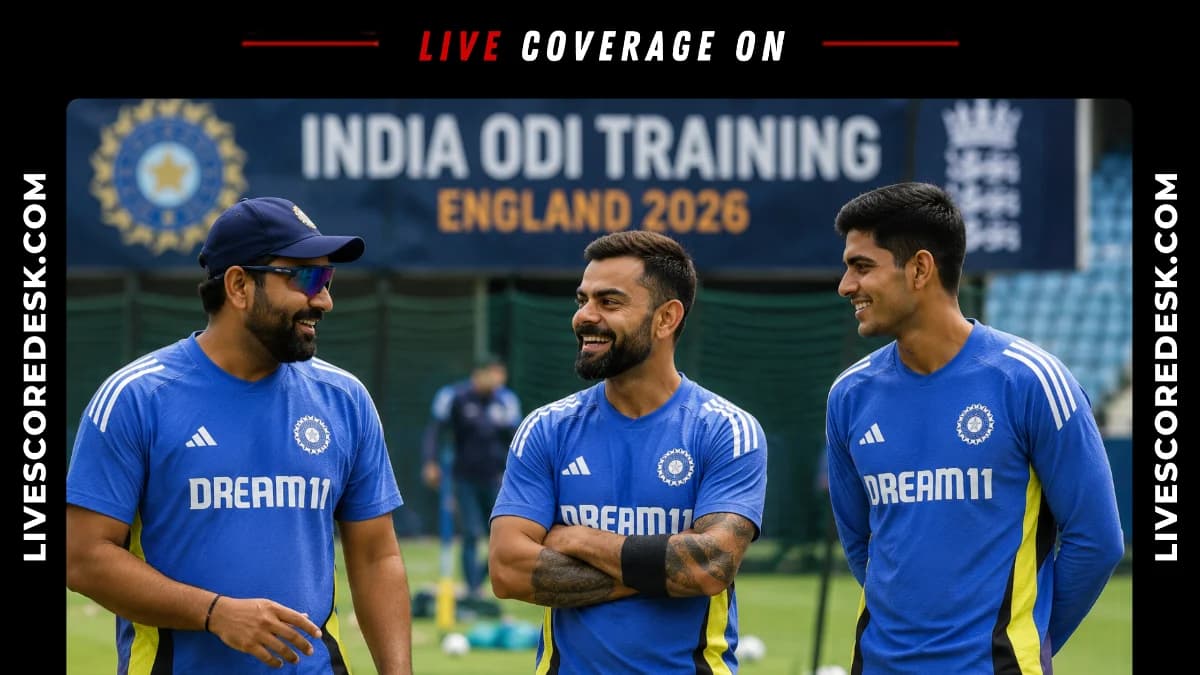
India's ODI rotation plan is no longer optional — it's essential if the 2027 World Cup is the priority.
India's ODI rotation policy has become the biggest selection debate ahead of the 2027 ICC Men's Cricket World Cup. Reports indicate the Indian team management and selectors want to rotate senior players such as Rohit Sharma, Virat Kohli and KL Rahul during the build-up to the tournament, but convincing those experienced names to embrace the strategy is proving difficult.
The discussion has gathered momentum before India's three-match ODI series against England, the first major 50-over assignment since the team's disappointing T20 results. Rather than treating every ODI as a must-win event, the management appears keen to create opportunities for younger players while keeping the senior core fresh for South Africa 2027.
Why India's ODI rotation policy has become unavoidable
India aren't simply planning workloads. They're trying to solve a succession problem.
According to multiple reports, selectors previously considered resting Rohit Sharma during the Afghanistan ODI series to create opportunities for emerging opener Yashasvi Jaiswal, although the idea wasn't ultimately implemented. Jaiswal's omission from the England ODI squad despite recent success illustrates how difficult it has become to balance immediate results with long-term planning.
Here's the part nobody's saying out loud: if younger players don't receive meaningful ODI exposure before the World Cup, India could enter the tournament with little certainty beyond its established stars.
"The experienced lineup helps a lot in pressure situations."
— Shubman Gill on the value of senior players.
Experience still matters — and that's the strongest counter-argument
There's a compelling reason not to rotate too aggressively.
India captain Shubman Gill has publicly stressed that Rohit Sharma and Virat Kohli remain central to India's plans for the 2027 World Cup. Gill has also revealed discussions with Kohli about future ODI planning, underlining that the veterans continue to influence the team's direction both on and off the field.
That argument deserves respect. Few players handle pressure in ODI cricket better than Rohit or Kohli.
Yet experience alone can't answer every selection question. The management also needs reliable backup options should injuries, workload concerns or loss of form arise before the World Cup. Rotating selectively over the next year isn't a rejection of senior players; it's insurance against uncertainty.
India have already demonstrated in recent months that balancing youth and experience isn't straightforward. Reports surrounding the Afghanistan series suggested selectors debated resting senior players before deciding to retain them, showing this conversation has been ongoing rather than reactionary.
The recent T20 setbacks have only intensified scrutiny over India's broader white-ball planning, making the ODI programme even more significant.
Stats
- - Upcoming focus: Three-match ODI series against England opens India's preparations for the 2027 World Cup.
- - Senior players involved: Rohit Sharma, Virat Kohli and KL Rahul are reportedly central to the proposed rotation discussions.
- - Young player affected: Yashasvi Jaiswal impressed in recent ODIs but misses the England squad.
- - Leadership stance: Shubman Gill says Rohit and Kohli remain vital to India's 2027 World Cup plans.
India's next selection calls will reveal the real strategy
The England ODI series should provide the first indication of whether India are genuinely committed to rotation or merely discussing it.
If Rohit Sharma, Virat Kohli and KL Rahul continue playing every available ODI, opportunities for fringe players will remain limited. If the management begins resting senior names in carefully selected matches, the pathway towards the 2027 World Cup becomes much clearer.
The evidence suggests India don't need to choose between experience and transition. They need both. A controlled rotation policy is the only realistic way to preserve proven match-winners while ensuring the next generation arrives in South Africa with genuine ODI experience rather than untapped potential.