
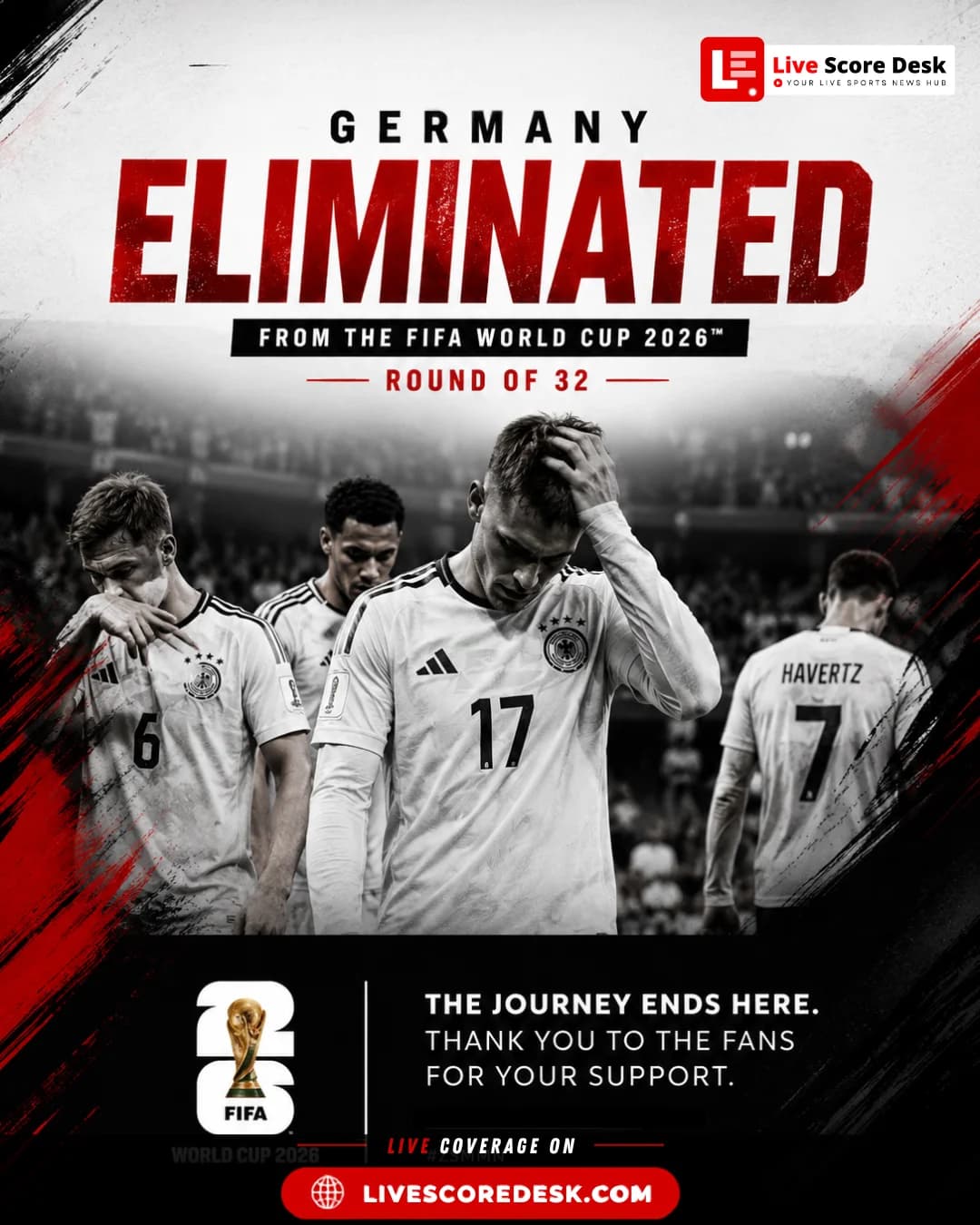
Germany crisis after World Cup exit: Paraguay defeat exposes deeper flaws
For years, Germany have been viewed as international football's ultimate tournament specialists. They survived pressure, won penalty shootouts and found solutions when others panicked. Not anymore. Their 4-3 penalty shootout defeat to Paraguay after a 1-1 draw in the FIFA World Cup Round of 32 wasn't simply one bad night in Foxborough. It was another chapter in a worrying trend that raises uncomfortable questions about where one of football's greatest nations is heading.
The defeat itself was dramatic. Julio Enciso gave Paraguay a surprise first-half lead before Kai Havertz restored parity after the break. Germany dominated possession, believed they had won the tie through Jonathan Tah in extra time, only for VAR to disallow the goal for a foul on goalkeeper Orlando Gill. The match drifted to penalties, where Germany suffered something previously unthinkable — their first-ever World Cup penalty shootout defeat.
Why Germany's World Cup crisis can no longer be ignored
Here's the part nobody's saying out loud: Germany's problem isn't that they lost a penalty shootout. It's that they keep arriving at major tournaments looking less convincing than their reputation suggests.
Since lifting the World Cup in 2014, Germany have repeatedly failed to match expectations on football's biggest stages. The latest elimination continues a pattern of underachievement that no longer feels accidental. Against Paraguay they enjoyed overwhelming possession and territorial control but struggled to create enough clear-cut chances against Gustavo Alfaro's disciplined defensive structure. Even when they finally appeared to have found a winner through Tah, the margins again went against them.
The penalty shootout merely magnified those issues. Kai Havertz and Nick Woltemade saw their efforts saved by Orlando Gill before Tah blazed over, allowing José Canale to convert the decisive kick. Germany's historic aura in shootouts vanished in a matter of minutes.
"I am not someone who runs away."
— Julian Nagelsmann after Germany's elimination.
Nagelsmann's defence deserves consideration — but not acceptance
Julian Nagelsmann has refused to resign, insisting he remains committed unless the German Football Association decides otherwise. That's a reasonable position. Managers shouldn't automatically lose their jobs after every major disappointment.
Yet the evidence is becoming difficult to dismiss.
Germany controlled possession against Paraguay, created sustained pressure and finished the night wondering how they had gone home. Supporters can point to the controversial VAR intervention that cancelled Tah's extra-time header, a decision criticised by several pundits as extremely soft. They can also argue that football often comes down to fine margins. All of that is true.
But elite international sides consistently create enough opportunities to remove luck from the equation. Germany didn't. Paraguay defended with remarkable discipline, trusted Orlando Gill when it mattered most and executed their plan almost perfectly. That's not fortune. That's efficiency.
The bigger concern is psychological. Germany had won each of their previous four World Cup penalty shootouts before this defeat. Their reputation in those moments became part of football folklore. Watching three players fail from the spot suggested a team carrying the weight of expectation rather than embracing it. Sports psychologist Geir Jordet noted that successful penalties rely heavily on mental preparation, not merely technical execution.
Germany's next chapter must be about rebuilding belief
Germany don't need wholesale panic. They still possess outstanding talent, an accomplished coach and one of football's strongest development systems.
They do, however, need honesty.
Nagelsmann is right to argue that this squad has quality. The performances have often contained promising passages, and one controversial refereeing decision undeniably altered the narrative in Foxborough. Yet major tournaments are judged by outcomes, not potential. Until Germany consistently translate control into victories, questions about their mentality, attacking efficiency and tournament identity will remain justified.
The verdict is unavoidable: this wasn't simply Paraguay producing a famous upset. It was Germany confirming that their post-2014 decline remains unresolved. Until that changes, every major tournament will begin with hope but end with the same uncomfortable conversation.