
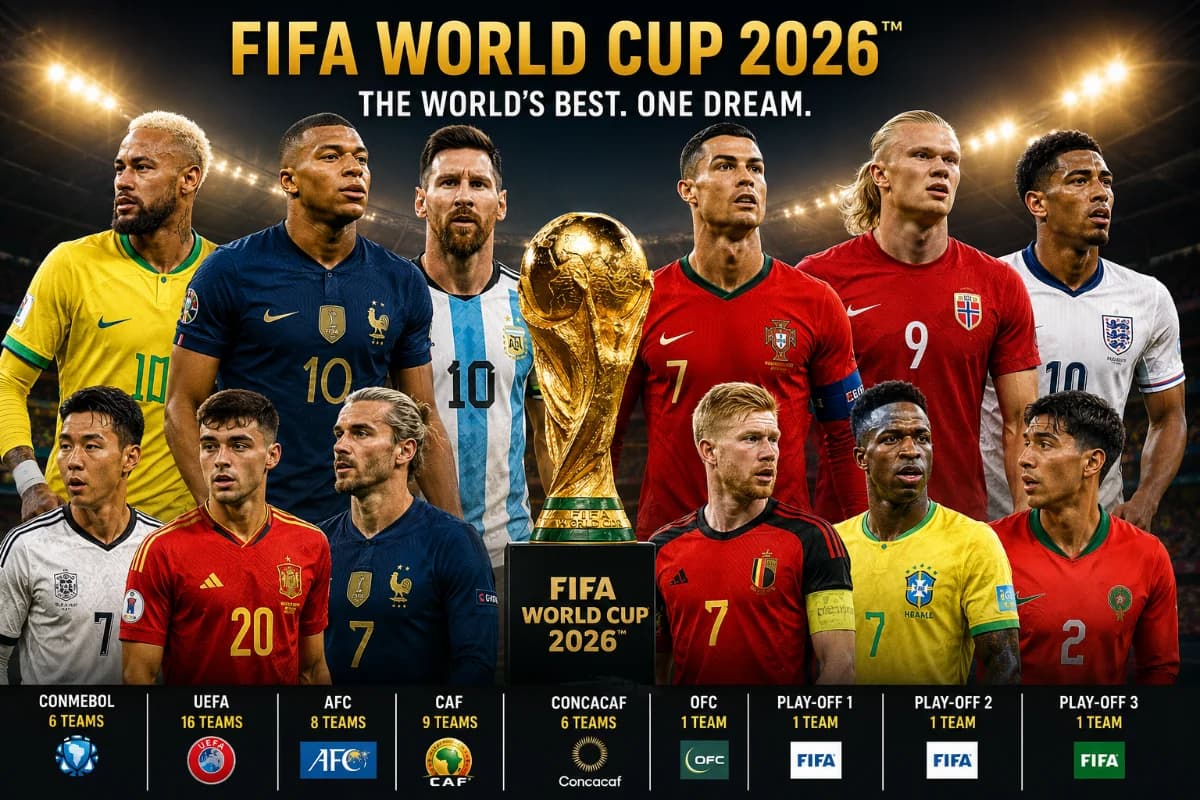
Why World Cup 2026 Has Already Challenged Pre-Tournament Assumptions
One of the strongest early themes has been the gap between reputation and performance. Germany's opening display — a 7-1 win over Curaçao — suggested a side capable of controlling matches through possession and structured pressing. France once again demonstrated the depth that makes them contenders, beating Senegal 3-1 with attacking options like Michael Olise, who was named Man of the Match on his tournament debut, capable of changing matches without dominating every phase of play. England, under Tuchel, showed a more aggressive attacking structure than many supporters expected, beating Croatia 4-2 by creating opportunities through quicker combinations and movement between the lines.
Yet the tournament has also highlighted vulnerabilities.
Portugal remain one of the most talented squads in the competition, but their 1-1 draw with World Cup debutants DR Congo raised questions about whether their current attacking setup maximises the players around Ronaldo. Spain controlled large periods of possession in a goalless draw with Cape Verde but, without the injured Lamine Yamal, lacked the cutting edge required to turn territorial dominance into goals. Argentina, by contrast, offered the most emphatic answer of the round — though questions about squad depth and life after Messi haven't disappeared just because of one dominant night.
"After one round of matches, the World Cup's biggest certainty is that very few certainties remain."
The Players Driving The Conversation
Every World Cup produces breakout stars and renewed debates around established names. This tournament is already doing both. Michael Olise's influence for France has drawn attention because of his ability to progress attacks and create chances in crowded areas. For England, discussions have centred less on individual brilliance and more on whether Tuchel's tactical adjustments can finally unlock the squad's attacking potential on the biggest stage.
At the other end of the spectrum sits Ronaldo. The Portugal captain remains one of football's most accomplished players, but every appearance now generates scrutiny over balance, mobility and tactical fit — and his quiet outing against DR Congo, with one of the fewest touches of any Portugal starter, did little to settle that debate. Supporters point to his experience, leadership and goal-scoring record. Critics focus on whether Portugal's younger attacking players could benefit from a different structure. Neither argument disappeared after the opening match.
Here's the part nobody's saying out loud: World Cups are rarely won by the most talented squad alone. They are usually won by the team whose key players fit together at exactly the right moment. That is why early impressions matter. Germany's organisation, France's depth, England's evolving approach and Argentina's Messi-driven masterclass all provide clues about what may happen later in the tournament.
A quick comparison:
1. France entered the tournament with elite depth across multiple positions.
2. England arrived with tactical questions but significant attacking talent.
3. Portugal brought experience and individual quality.
4. Argentina retained the tournament's most influential figure in Messi — and he delivered immediately, with a hat-trick on his 200th international appearance.
Different strengths. Different risks.
What The Early Evidence Says About The Contenders
History suggests caution is required when judging teams after one match. Several previous World Cup winners improved significantly as tournaments progressed. Early performances can reveal trends, but they rarely provide the full picture. The last month of preparation, squad fitness, suspensions and knockout-match dynamics often matter more than opening-week narratives.
Still, patterns are emerging.
France appear equipped to handle adversity because of their squad depth. Germany have shown signs of tactical clarity. England's attacking structure under Tuchel has generated optimism, although defensive questions remain unresolved after conceding twice to Croatia. Portugal continue to balance proven experience against the need for evolution. Spain's possession game remains effective, but efficiency in front of goal could become a defining issue. Argentina, despite longer-term questions about life beyond Messi, showed no sign of slowing down in round one.
The Netherlands and Brazil have also offered reminders that tournament football rewards adaptability — the Dutch were pegged back late for a 2-2 draw with Japan, while Brazil were held 1-1 by Morocco. Neither side needs to dominate every statistical category to progress. What matters is solving the specific problem in front of them each match. That's often where World Cups are decided.
Several outsiders deserve attention as well. Smaller nations have already demonstrated that compact defensive shapes, disciplined pressing and effective counter-attacks can reduce the gap between favourites and underdogs — DR Congo's point against Portugal and Cape Verde's defensive masterclass against Spain are early examples. The expanded 48-team format was expected to create mismatches, yet many teams have shown they belong on this stage.
The Next Numbers That Will Matter
World Cup 2026 has already produced debate, tactical intrigue and shifting expectations. The strongest teams are not necessarily those who looked most comfortable in Matchday One, but those capable of adapting when pressure increases. As the second round of group-stage fixtures begins, the numbers worth tracking are simple: points earned, chances created and problems solved. Those figures, more than any early overreaction, will determine who is still standing in July.