
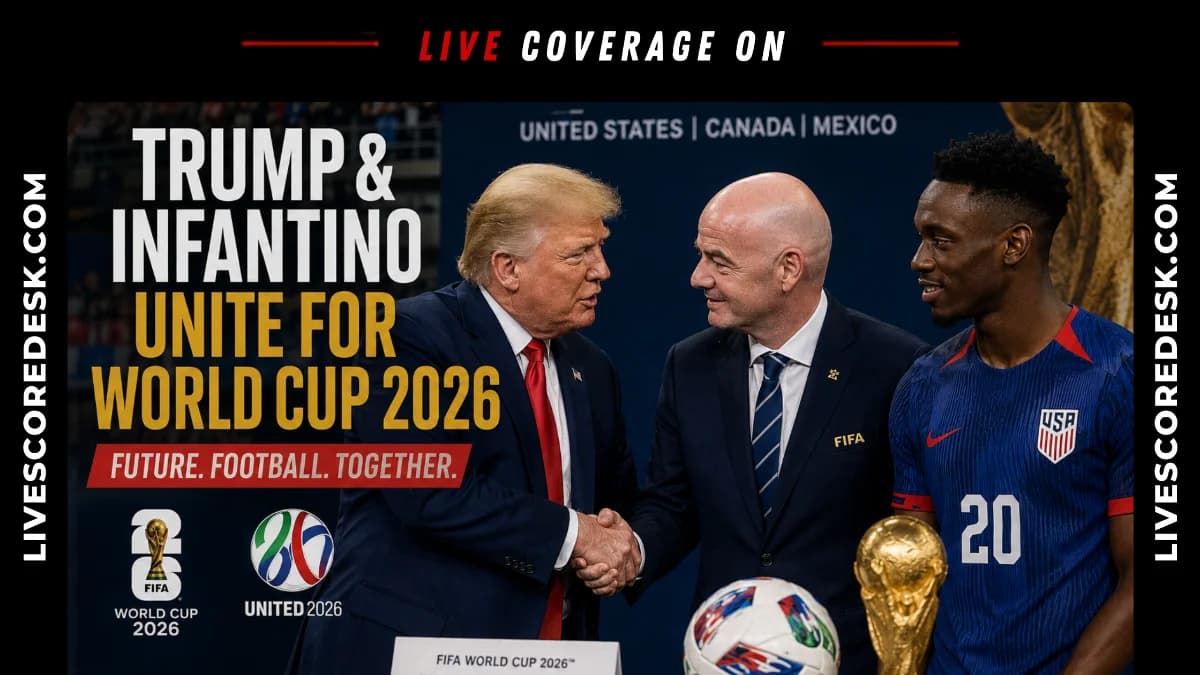
Donald Trump Call to Gianni Infantino Sparks FIFA Storm Over Folarin Balogun Ban
Article Body
2 events have transformed Folarin Balogun's World Cup suspension into one of the biggest controversies of FIFA World Cup 2026: a direct phone call from US President Donald Trump to FIFA president Gianni Infantino, followed by FIFA's decision to suspend Balogun's automatic one-match ban. The move allowed the United States striker to play against Belgium and immediately triggered accusations that football's disciplinary process had crossed into political territory.
Balogun had been sent off during the United States' 2-0 victory over Bosnia and Herzegovina after a VAR review determined he had planted his boot into Tarik Muharemovic's ankle. Under FIFA regulations, the dismissal carried an automatic one-match suspension. Instead, hours before the Round of 16 meeting with Belgium, FIFA announced that the implementation of the suspension would be suspended for a one-year probationary period, making the striker eligible.
What Led To FIFA's Decision On Balogun
According to Reuters, Trump personally contacted Infantino to request a review of the incident after believing the referee had made the wrong decision. Sources familiar with the conversation said the call came before FIFA's disciplinary announcement.
FIFA did not rescind the red card itself. Instead, it invoked Article 27 of the FIFA Disciplinary Code, suspending the enforcement of the automatic ban for a probationary period. If Balogun commits another offence of similar seriousness during that period, the suspended sanction can be activated alongside any fresh punishment.
A short comparison highlights why the decision stood out:
- 1.Red card remained on record.
- 2.Automatic suspension was paused rather than cancelled.
- 3.Balogun became available immediately for the Belgium knockout match.
That distinction mattered legally. Politically, it raised even bigger questions.
"All I did, I asked for a review, because I didn't think it was a foul.
— Donald Trump.
Growing Backlash Across World Football
The decision produced an immediate reaction beyond the United States.
Belgium criticised the ruling before its Round of 16 meeting with the Americans, while officials elsewhere questioned whether political influence had entered FIFA's disciplinary process. Germany Football Association president Bernd Neuendorf publicly called on FIFA to explain reports linking the reversal to Trump's phone call, arguing that the integrity of the competition required a clear response.
The controversy has since expanded beyond football. Human rights organisation FairSquare announced plans to submit a complaint to the International Olympic Committee alleging that Infantino may have breached principles of political neutrality through his relationship with Trump. The organisation had already filed a complaint with FIFA's Ethics Committee months earlier over separate concerns involving the FIFA president.
Balogun ultimately featured against Belgium, but the United States suffered a 4-1 defeat and exited the tournament. The result did little to quiet debate surrounding FIFA's decision-making process.
What Happens Next
Attention has shifted away from Balogun and towards FIFA's governance.
Calls for greater transparency are growing, while ethics complaints and public criticism continue to mount over whether political leaders should have any influence—direct or indirect—over sporting disciplinary decisions. FIFA has maintained that the disciplinary process was handled through its independent mechanisms, but scrutiny of Infantino's relationship with Trump is unlikely to disappear soon.
For FIFA, this controversy may ultimately be measured less by one suspended ban than by the number of investigations and official explanations that follow.