
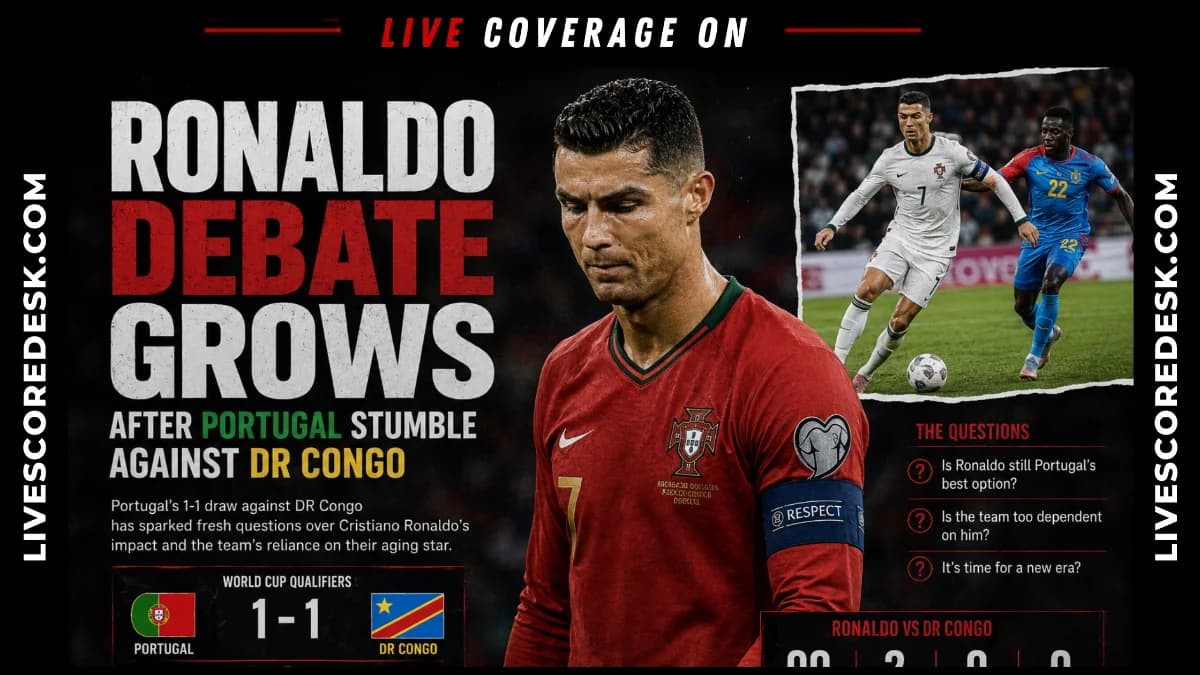
Cristiano Ronaldo and Portugal's World Cup prospects have become one of the tournament's defining debates after the team's opening match. Portugal remain among the strongest squads in the competition on paper, yet questions resurfaced after a 1-1 draw with DR Congo in Houston. The central issue is straightforward: does building the attack around a 41-year-old Ronaldo still give Portugal the best chance of winning the World Cup? The answer depends on whether observers view the draw as evidence of Ronaldo's limitations or of wider tactical shortcomings.
The discussion intensified after Portugal surrendered an early lead against DR Congo in their Group K opener. João Neves put Portugal ahead in the sixth minute before Yoane Wissa equalised before half-time in a match that ended 1-1. Portugal controlled possession for long periods but created relatively few clear opportunities, while Ronaldo failed to register a meaningful attacking impact despite completing a record sixth World Cup appearance. That performance provided fresh ammunition for critics, although coach Roberto Martinez argued the team's issues extended beyond any individual player.
Why Cristiano Ronaldo Has Become Portugal's Biggest Tactical Question
The case against Ronaldo centres on what happened in Houston. Portugal dominated possession but struggled to convert territorial control into chances, and Ronaldo was largely isolated against a disciplined Congolese defence. ESPN statistics highlighted that he recorded only 25 touches, the lowest figure of his World Cup career, while also registering his fewest touches inside the opposition penalty area. Critics argue that Portugal's talented midfield of Bruno Fernandes, Vitinha and João Neves often appears constrained by a system designed to maximise service into Ronaldo. Supporters counter that Portugal's overall attacking rhythm lacked urgency regardless of who occupied the centre-forward role.
"Portugal dominated possession but produced only one shot on target after taking the lead."
Roberto Martinez's Defence Of Ronaldo's Role
Martinez has firmly rejected suggestions that Ronaldo should be removed from the starting side. Following the draw, the Portugal coach defended his decision not to substitute the captain, stating that removing "the best goal scorer in world football" when a goal was needed would have made little sense. Martinez instead pointed to a broader team issue, arguing that Portugal lost intensity after scoring early and allowed DR Congo to settle into the contest. His position is consistent with comments made throughout 2026, when he repeatedly described Ronaldo as a leader and an example for younger players.
The wider context complicates any simple conclusion. Ronaldo remains international football's all-time leading men's goalscorer with 143 goals for Portugal, a record that continues to underpin Martinez's faith in him. Yet questions surrounding his effectiveness at major tournaments have persisted, particularly as he approaches his 42nd birthday. According to recent tournament records, Ronaldo has now gone multiple major tournament matches without scoring, a sequence that has fuelled debate about whether Portugal should gradually transition towards a different attacking structure. The last comparable discussion came before the 2022 World Cup, when Fernando Santos faced scrutiny over Ronaldo's place in the team, highlighting how long this conversation has followed Portugal.
International Goals Cristiano Ronaldo — 143
World Cup AppearancesCristiano Ronaldo — 6
Age During TournamentCristiano Ronaldo — 41
Touches vs DR CongoCristiano Ronaldo — 25
What Happens Next In The Ronaldo Debate
Portugal's next Group K fixture against Uzbekistan is likely to become the next major reference point in this discussion. The draw against DR Congo leaves Portugal with work still to do in a group that also includes Colombia, although the tournament's expanded format means qualification remains firmly within their control. Martinez must decide whether tactical adjustments are required while maintaining confidence in his captain. Equally, a strong attacking display in the next match could quickly reduce scrutiny around Ronaldo's role.
For now, the facts remain mixed. Portugal possess one of the tournament's deepest squads and remain expected contenders for progression from Group K, while Ronaldo continues to command the coach's support despite increased external criticism. The next confirmed fixture is Portugal's meeting with Uzbekistan, where both the result and the team's attacking performance will be examined closely. That match may provide clearer evidence as to whether the debate surrounding Ronaldo is primarily about the player himself or about how Portugal are choosing to play around him.