
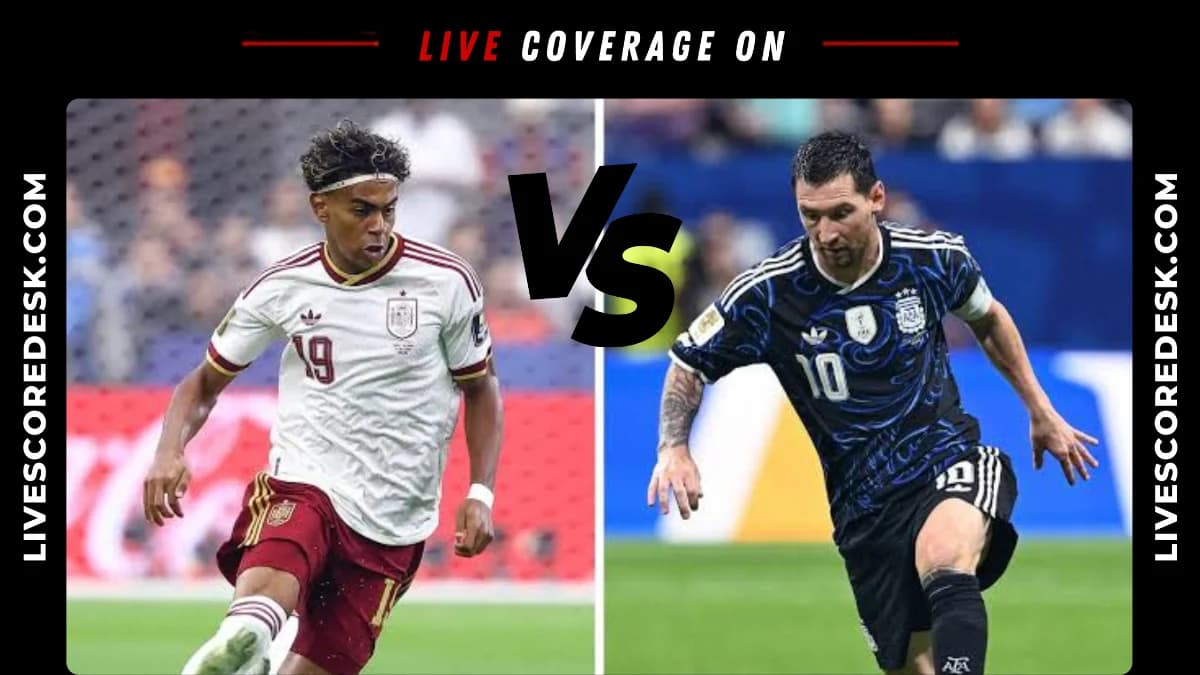
Messi vs Yamal: Is Football About to Witness Its Greatest Passing of the Torch?
Lionel Messi vs Lamine Yamal is the defining storyline of the 2026 FIFA World Cup final. The debate isn't simply about Argentina against Spain—it is whether football is about to experience its clearest generational handover on its biggest stage.
The final at New York New Jersey Stadium brings together the defending world champions and the reigning European champions, but it also places Barcelona's greatest-ever graduate opposite the academy's brightest new star. That contrast has become the tournament's dominant narrative, helped by the widely shared photograph of a 20-year-old Messi holding six-month-old Yamal during a UNICEF charity calendar shoot in 2007.
Why Messi vs Yamal Has Become Bigger Than The Match
Football has produced iconic individual rivalries before. Johan Cruyff against Franz Beckenbauer in 1974 and Ronaldo against Zinedine Zidane in 1998 remain historic World Cup moments. Yet neither carried the symbolism now attached to Messi and Yamal. One represents arguably the greatest career the sport has seen. The other is viewed as the player most capable of defining the next era.
The timing only strengthens the discussion. Messi, now 39, could be playing his final World Cup match, while Yamal, still only 19, has already established himself as Spain's most exciting attacking talent despite carefully managed minutes during the tournament because of a hamstring issue. Reuters described the meeting as one rich with "personal twists" extending far beyond tactics alone.
"It is master against successor."
Experience Meets The Future
The strongest argument for Messi remains influence.
Argentina continue to build almost every attacking sequence around their captain. His creative numbers and leadership have driven Lionel Scaloni's side through another demanding knockout run, including a semi-final victory over England in which Messi supplied both assists. FIFA's player rankings also place him among the tournament's leading attacking and creative performers heading into the final.
Spain offer a different case entirely.
Luis de la Fuente's team relies less on one individual than on collective control through midfield. Their possession game has produced a remarkable unbeaten run, while Yamal has operated within a structured tactical system instead of carrying the attack alone. Supporters pointing to Spain's balance argue that this reduces pressure on the teenager. Others counter that Yamal's ability to change matches with one moment of brilliance is precisely why comparisons with Messi have accelerated.
More Than A Barcelona Connection
The famous photograph from 2007 has transformed what might already have been an exceptional football story into something unique.
Messi helped build Barcelona into one of football's defining dynasties. Nearly two decades later, Yamal has emerged from the same La Masia academy as the player most frequently described as his heir. That link has encouraged comparisons which neither player has actively embraced.
Messi has consistently avoided discussing successors, preferring to focus on his own football, while Yamal has largely allowed his performances to answer growing expectations. The symbolism nevertheless remains powerful because it combines history, coincidence and sporting excellence in a single final.
STATS
What Happens After The Final?
Whatever the result, Sunday's final is likely to shape football's narrative for years.
If Argentina retain the trophy, Messi's international legacy gains another defining chapter after ending decades of World Cup debate in Qatar. If Spain prevail, Yamal's rise enters a different category altogether, giving the teenager the sport's biggest prize before his 20th birthday.
The match will also decide whether experience or youth defines this World Cup. The outcome settles a trophy. The wider conversation—about football's next great era—will continue long afterwards.