
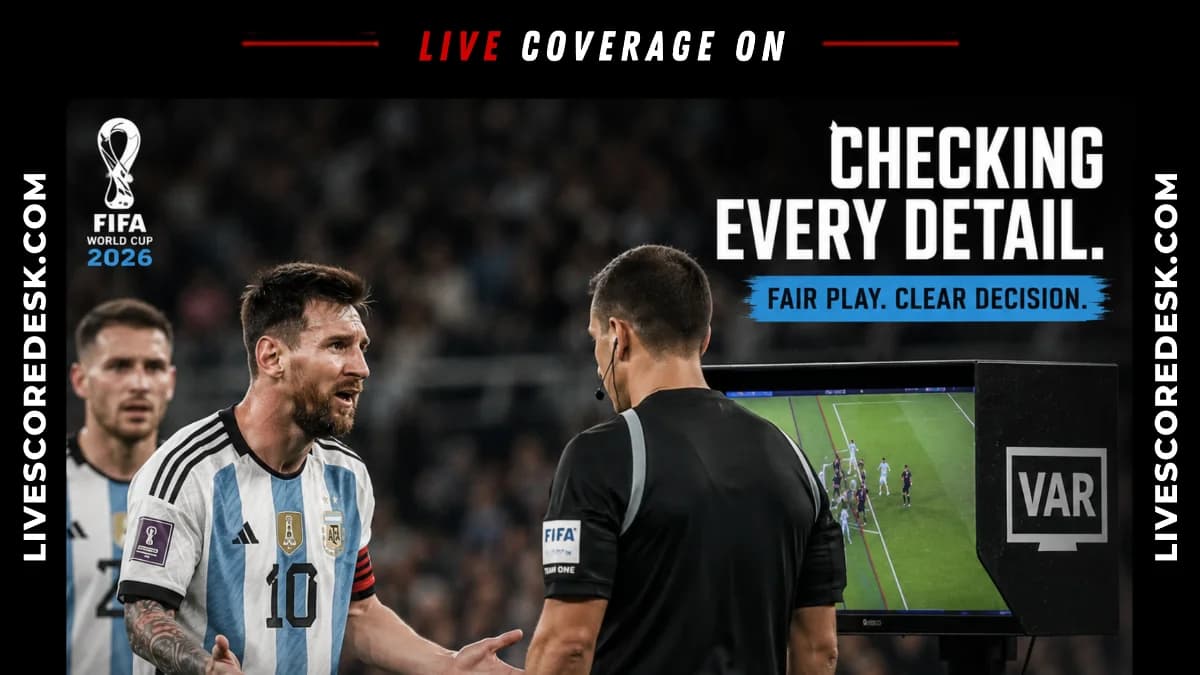
Is Argentina Really the Most Protected Team at the 2026 World Cup? The VAR Numbers Explained
By Kartik Sharma | Data Analyst & Reporter
6.7 VAR interventions in Argentina's favour per 100 fouls is one of the highest figures recorded at the FIFA World Cup 2026. Yet the numbers alone don't prove Lionel Messi's side has received preferential treatment. That's the debate dominating football as the tournament heads into its final four.
Argentina's dramatic knockout victories have been accompanied by repeated VAR controversies, prompting accusations from rival players, coaches and supporters that the defending champions are receiving favourable officiating. Social media has amplified those claims following contentious decisions against Egypt and Switzerland. But while tournament data shows Argentina have indeed benefited from several VAR interventions, it also suggests the picture is more complicated than the online narrative.
The data behind the "Argentina are protected" argument
The latest discussion was sparked after Argentina's Round of 16 comeback victory over Egypt and their quarter-final against Switzerland. Egypt's camp argued the tournament had been "rigged" after a second-half goal was ruled out following a VAR review, while Switzerland questioned the intervention that resulted in Breel Embolo's dismissal.
Compiled figures published by Northeastern Global News show Argentina ranked second among teams benefiting from VAR through the Round of 16.
The figures are measured as VAR interventions per 100 fouls.
"Argentina ranked second in VAR interventions in their favour through the Round of 16, behind only Mexico."
What FIFA and officials say about VAR decisions
FIFA has consistently maintained that VAR decisions are made independently and according to the Laws of the Game rather than the identity of the teams involved.
Criticism intensified after Egypt surrendered a 2-0 lead before losing 3-2 in Atlanta. Their disallowed goal became the focal point, with Egyptian players arguing that Argentina's fouls elsewhere during the match did not receive similar scrutiny.
Another controversial moment arrived against Switzerland when VAR prompted a review that ultimately led to Breel Embolo being cautioned under the "mistaken identity" protocol. Many observers questioned whether intervention was necessary at all.
Still, controversy alone isn't proof of bias. Every World Cup produces disputed VAR calls involving multiple nations, particularly once the knockout rounds begin and margins become increasingly fine.
Historical comparisons also provide context. Earlier World Cups generated comparable debates over officiating involving France in 2018 and Argentina during Qatar 2022, yet FIFA has repeatedly defended the consistency of its review system.
The numbers also show other teams suffered far more
Looking only at Argentina's favourable interventions ignores another side of the dataset.
Croatia emerged as the tournament's biggest losers in VAR decisions.
Most negatively affected teams:
That contrast matters.
Argentina recorded no VAR interventions against them through the Round of 16, but several eliminated teams experienced repeated decisions going the opposite way without receiving a single favourable review.
Another comparison is equally revealing.
| Category | Figure |
|---|---|
| Argentina VAR interventions in favour | 6.7 per 100 fouls |
| Argentina VAR interventions against | 0.0 |
| Highest favourable VAR rate | Mexico – 7.8 |
| Most negatively affected team | Croatia – 6.5 against, 0.0 in favour |
What comes next for this VAR debate
The conversation is unlikely to disappear before the tournament ends.
Every major VAR decision involving Argentina will receive heightened scrutiny simply because the defending champions remain alive and Lionel Messi's pursuit of another World Cup dominates global attention.
Yet the available numbers stop short of proving the tournament has been manipulated. They demonstrate that Argentina have benefited from several reviews and have avoided negative interventions through the Round of 16. They also show Mexico received an even higher favourable rate, while several other nations consistently found themselves on the wrong end of VAR decisions.
Ultimately, statistics identify patterns. They don't establish intent.
The semi-finals and potential final may deliver another defining VAR moment. If they do, one number will shape the debate more than any other: will Argentina finally receive their first VAR decision against them, or will the trend continue until the tournament concludes?