
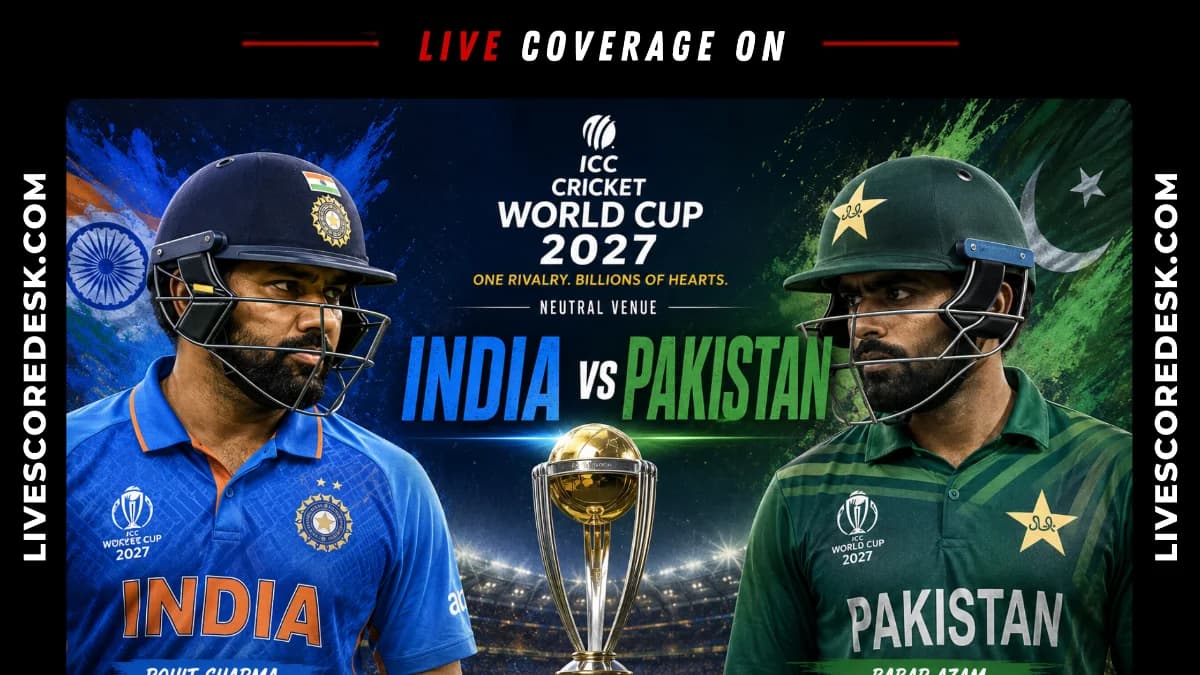
India vs Pakistan Could Meet Three Times At 2027 Cricket World Cup After ICC Format Change
The possibility of India vs Pakistan taking place three times during a single ICC Men's Cricket World Cup has moved closer after the International Cricket Council (ICC) approved a revised format for the 2027 edition. The tournament, scheduled to be hosted by South Africa, Zimbabwe and Namibia, will feature 14 teams split into two groups of seven before progressing to a Super Six stage, creating multiple routes for the two rivals to meet if both advance.
The format marks a return to the structure last used at the 2003 Men's Cricket World Cup. Under the approved system, each team plays the other six sides in its group once, with the top three from each group qualifying for the Super Six. Results against the other qualifying teams from the same group are carried forward, while teams then face the three qualifiers from the opposite group. The top four sides in the Super Six standings progress to the semi-finals.
How The New ICC World Cup Format Creates Three India vs Pakistan Fixtures
The revised competition structure means India and Pakistan could first meet during the group stage, provided they are drawn into the same pool. That fixture would count towards qualification for the Super Six if both teams finish among the top three in their group.
A second meeting becomes possible in the Super Six, but only if the teams qualify from opposite groups. Under the format approved by the ICC, each Super Six qualifier plays only the three advancing teams from the opposite group, rather than facing teams from its own section again. If India and Pakistan begin the tournament in different groups and both progress, they could meet at this stage.
The third opportunity would arise in the knockout rounds. Should both sides reach the semi-finals and continue progressing through the bracket, they could face each other either in a semi-final or in the tournament final, depending on the final standings and fixtures.
If India and Pakistan are drawn in the same opening group, however, they cannot play one another again in the Super Six because results against teams progressing from the same group are carried forward instead of replayed. In that scenario, a second meeting would only be possible in the knockout phase.
The scheduling possibilities have attracted attention because encounters between the two nations remain among cricket's most watched sporting events. Bilateral cricket between India and Pakistan has not taken place for more than a decade because of political tensions, meaning ICC and Asian Cricket Council tournaments provide the primary occasions on which the rivals meet.
What Led To The ICC's Decision
The ICC confirmed the competition format during its Annual General Meeting, opting to revive the model used at the 2003 World Cup rather than retaining the single-league system employed in India in 2023. Tournament organisers believe the structure balances league-stage opportunities with a broader knockout race while ensuring every qualified nation plays at least six matches.
The 2027 World Cup will feature 14 teams, compared with the 10-team event staged in England in 2019 and the expanded league format used in 2023. The expansion is intended to give more Associate and emerging Full Member nations an opportunity to compete on cricket's biggest one-day stage.
The return of the Super Six also revives a format familiar to long-time followers of the World Cup. Australia won the 2003 edition in South Africa after progressing through the same competition structure before defeating India in the final at Johannesburg. That remains the only previous men's ODI World Cup to use the exact combination of a group stage followed by a Super Six before the semi-finals.
"The 2027 ICC Men's Cricket World Cup will feature 14 teams divided into two groups of seven, followed by a Super Six stage before the semi-finals and final."
The approved format means qualification remains critical beyond simply reaching the Super Six. Teams carry forward points earned against fellow qualifiers from their own group, making every group-stage match against likely qualifiers particularly valuable. A defeat early in the tournament could therefore continue to affect a team's position deep into the competition.
For India and Pakistan, whose meetings regularly draw some of the highest global television audiences in cricket, the revised structure increases the number of pathways to another high-profile encounter. Whether those meetings actually happen will depend entirely on the tournament draw and how both teams perform across the group stage and, if they qualify, the Super Six.
ICC Format Change Draws Attention Across The Cricket World
The revised format has prompted widespread discussion among supporters and former players because of the increased number of potential marquee fixtures, particularly involving India and Pakistan. While many fans have welcomed the return of the Super Six stage, others have pointed out that three meetings between the rivals remain a possibility rather than a certainty.
Tournament progression will ultimately determine whether those fixtures materialise. The group-stage draw, qualification positions and knockout results must all align before a third meeting can take place. In other words, the ICC's decision has created additional pathways—not guaranteed repeat fixtures.
The broader change is also significant for the competition itself. Expanding the World Cup to 14 teams gives more nations the opportunity to compete at the highest level after criticism of the 10-team tournaments in 2019 and 2023. The governing body has previously said that expanding global events forms part of its wider objective to grow the game across emerging cricket nations.
Key Facts Behind The 2027 ICC Men's Cricket World Cup Format
The tournament will be jointly hosted by South Africa, Zimbabwe and Namibia, marking the first men's ODI World Cup to be staged in Namibia and Zimbabwe since 2003. It will also be the first ICC Men's Cricket World Cup hosted across those three African nations.
Qualification for the event remains ongoing through the ICC pathway, with Full Members and Associate nations competing for the available places. Once the field of 14 teams is confirmed, the ICC will conduct the official draw to determine the two opening groups.
Only after that draw will it become clear whether India and Pakistan are placed together or in separate groups. Their route through the tournament—and any possibility of multiple meetings—will then depend entirely on performances on the field.
STATS
- - Tournament: ICC Men's Cricket World Cup 2027
- - Hosts: South Africa, Zimbabwe and Namibia
- - Teams: 14
- - Competition Format: Two groups of seven → Super Six → Semi-finals → Final
What Happens Next
The ICC will continue its qualification process before confirming all 14 participating teams and conducting the official group-stage draw closer to the tournament. That draw will determine whether India and Pakistan begin the World Cup in the same group or on opposite sides of the competition.
Until then, the prospect of three India-Pakistan clashes remains a mathematical possibility created by the revised tournament structure rather than a scheduled reality. The new format nevertheless ensures that the road to the 2027 World Cup title will differ significantly from the editions held in 2019 and 2023, with the return of the Super Six adding another strategic layer to the competition.