
How Football Formations Work
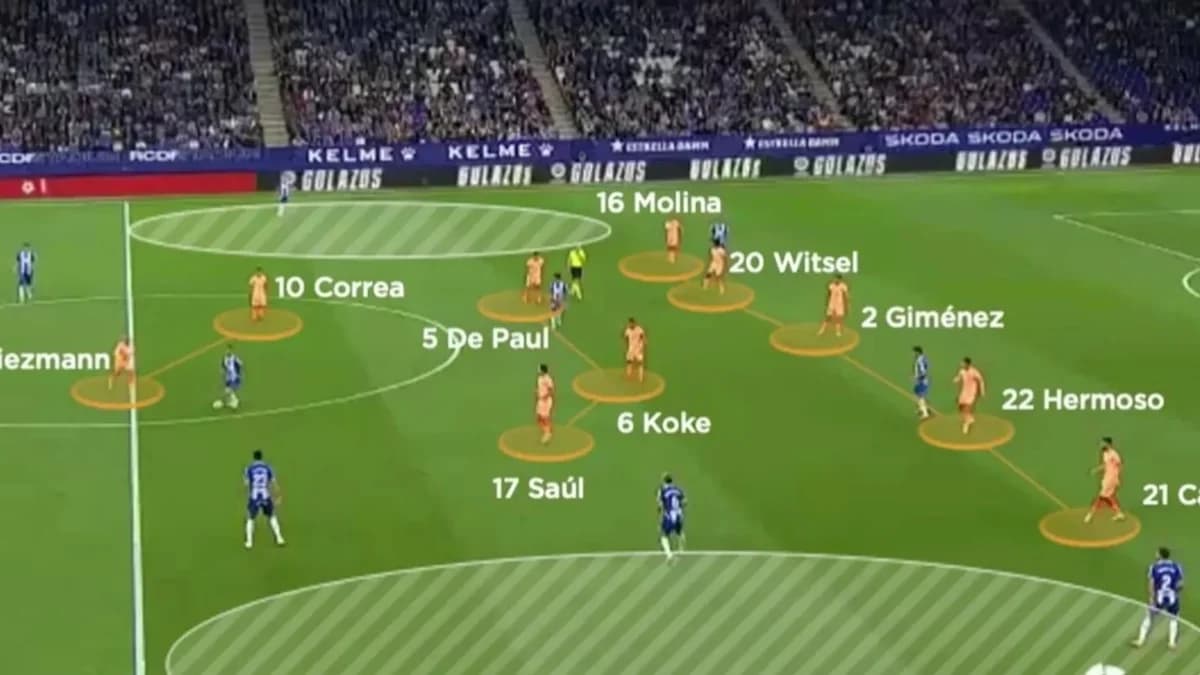
The easiest way to understand formations is to imagine a team defending first. A manager chooses where players begin on the pitch and how responsibilities are shared. In a traditional 4-3-3, the back four protects central areas, the midfield three control possession and transitions, and the front three provide width and goal-scoring threat.
Take a team building an attack from the goalkeeper. The centre-backs may spread wide, the defensive midfielder may drop between them and the full-backs may advance into attacking positions. On paper it still begins as a 4-3-3, but the shape can briefly resemble a 3-2-5 during possession. This is why commentators often say football formations are starting points rather than rigid structures.
One common misconception is that formations determine whether a team is attacking or defensive. That's not always true. A 4-3-3 can become highly defensive if the wingers drop deep, while a 5-2-3 can become aggressive if wing-backs push high up the pitch. The manager's instructions often matter more than the numbers themselves.
For example, many fans assume five defenders automatically means negative football. Yet several elite teams have used back-five systems to dominate possession and create large numbers of chances through wide overloads. The formation provides the framework; player roles determine the style.
How the 4-3-3 Formation Works
The 4-3-3 is one of the most popular formations in modern football because it balances attack and defence. It uses four defenders, three midfielders and three forwards.
In possession, the wide forwards stretch the pitch while midfielders create passing triangles. The system naturally provides width and allows teams to press aggressively after losing the ball. Many possession-based sides prefer the 4-3-3 because it creates multiple passing options across the pitch.
A typical structure includes:
- Two centre-backs
- Two full-backs
- One holding midfielder
- Two advanced midfielders
- Two wingers
- One central striker
The formation works particularly well when teams want to dominate possession and attack through wide areas.
A challenge for the 4-3-3 appears when opponents overload central midfield. Against systems using four or five midfielders, the three-man midfield can become stretched. Managers often solve this by asking a winger to move inside or a full-back to invert into midfield.
That tactical flexibility explains why the formation has remained popular across multiple generations. It adapts well to different styles and player profiles.
How the 3-5-2 Formation Works
The 3-5-2 uses three centre-backs, five midfielders and two strikers. It became particularly popular in Italy and has since spread throughout European football.
The key feature is the wing-back. These players provide almost all of the team's width. When attacking, they operate like wingers. When defending, they drop alongside the three centre-backs to create a back five.
This formation offers strong control of central areas because five midfielders can outnumber opponents. Teams often use the extra midfielder to dominate possession and disrupt opposition build-up play.
Consider a match against a team playing 4-3-3. The 3-5-2 side often enjoys a numerical advantage in midfield. Three central midfielders can combine with a deeper midfielder and attacking midfielder to create passing networks that are difficult to press.
The risk comes out wide. If wing-backs are pinned back by opposing wingers, the formation can struggle to create attacking width. Success therefore depends heavily on athletic wing-backs capable of covering large distances.
How the 5-2-3 Formation Works
The 5-2-3 is often misunderstood. Many people view it as purely defensive, but modern versions can be highly aggressive.
The formation begins with three centre-backs and two wing-backs. When defending, the wing-backs drop deep, creating a line of five defenders. When attacking, they move forward quickly and support the front three.
This setup gives teams strong protection against counter-attacks while still maintaining three forwards high up the pitch.
A common example occurs during international tournaments. Teams facing technically stronger opponents often choose a 5-2-3 because it provides defensive stability without sacrificing attacking outlets.
The three forwards remain available for transitions. Once possession is regained, quick passes into those advanced players can launch dangerous counter-attacks. That's why several successful World Cup sides have relied on variations of this shape.
Which Football Formation Is Best?
There is no universally best football formation. The ideal system depends on player characteristics, opposition strengths and tactical objectives.
A squad full of creative midfielders may benefit from a 3-5-2. Teams with elite wingers often favour a 4-3-3. Sides seeking defensive organisation against stronger opponents frequently choose a 5-2-3 or similar structure.
History supports this view. World Cup winners, Champions League champions and league-winning teams have succeeded using very different formations. Tactical success usually comes from executing a system effectively rather than choosing the trendiest shape.
For supporters, the most useful takeaway is to watch how formations change during matches. The listed formation on a team sheet is only the starting point. Modern teams regularly attack in one shape and defend in another. Once you understand the principles behind systems such as the 4-3-3, 3-5-2 and 5-2-3, tactical decisions become far easier to follow.
The next time you're checking LiveScoreDesk's live scores or reading a match report, pay attention to how a team's formation changes between phases of play. Those adjustments often explain the result better than the scoreline itself.