
Did England's World Cup Loyalty Cost Them? The Debate After 2026 Exit
By Kartik Sharma | Data Analyst & Reporter
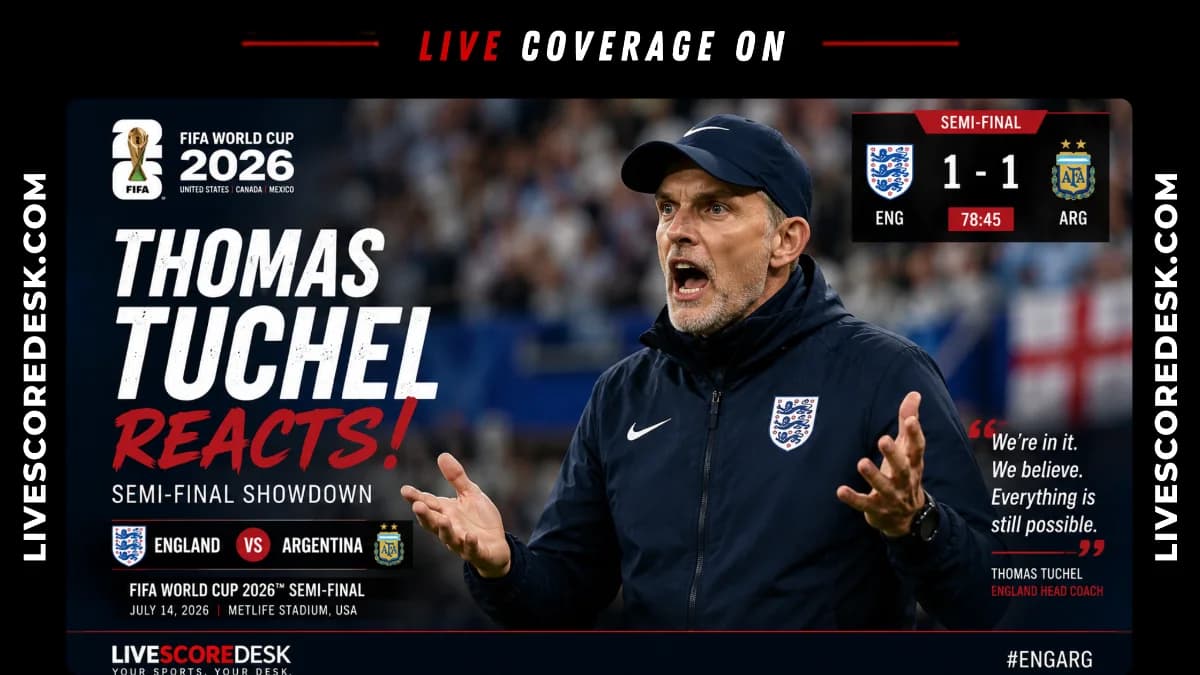
England World Cup failure has sparked one of the biggest debates of the tournament: did Thomas Tuchel trust reputation over performance? Seven days after England's 2-1 semi-final defeat to Argentina, the discussion has shifted away from tactics alone and towards selection, fitness and whether difficult decisions should have been made earlier.
England's campaign ultimately ended one match short of the final after surrendering a first-half lead against Argentina. While the result itself is settled, the reasons behind it remain contested. Football365's latest opinion argues England were undone by "sentiment, reputation and fear", suggesting established stars were retained despite concerns over fitness and form. Others, however, believe Tuchel's squad still exceeded expectations by reaching the semi-finals in his first major tournament.
Did England rely too heavily on established stars?
The central criticism is straightforward. England continued to trust several experienced players despite questions over their physical condition, while in-form alternatives remained largely unused.
Football365 points to players such as John Stones, Bukayo Saka, Reece James and Harry Kane as examples where reputation may have outweighed current readiness. The argument is that tournament football rewards those at peak fitness rather than those attempting to regain it under the brightest spotlight.
History offers examples supporting that philosophy. Italy's Salvatore "Toto" Schillaci famously forced his way into the 1990 World Cup squad on club form before finishing as the tournament's Golden Boot winner with six goals. Belgium also managed Kevin De Bruyne's minutes during the 2026 tournament, while Spain rotated attacking options even during the knockout rounds.
Instead of relying solely on familiar names, those teams demonstrated greater willingness to adapt according to form and match situations.
"The World Cup is not the place for players to rediscover fitness or form—it is where the sharpest and most deserving should play."
— Football365 reader Sanjit Randhawa
The counter-argument: Tuchel still delivered England's best run in years
Critics of the Football365 viewpoint argue that judging England solely by one difficult semi-final ignores the wider picture.
Thomas Tuchel guided England to the World Cup semi-finals in his first tournament as head coach, matching the nation's deepest run since Gareth Southgate's side reached the last four in 2018. England also progressed through qualification without defeat before arriving at the tournament.
Supporters of Tuchel's approach argue injuries and an unusually demanding travel schedule reduced his flexibility. Harry Kane remained England's captain and leading striker throughout the competition, while experienced players provided continuity in high-pressure knockout matches.
One Football365 reader defended Tuchel by noting that England's campaign was largely successful before the semi-final setback, arguing that one poor spell should not overshadow the broader progress achieved under the German coach.
A comparison highlights the debate:
England's World Cup failure fits a familiar historical pattern
Selection dilemmas have influenced countless World Cups.
Brazil famously started Ronaldo in the 1998 World Cup final despite concerns surrounding his health before kick-off. Italy benefited from Schillaci's remarkable rise in 1990 after rewarding domestic form over international reputation.
England's current debate therefore isn't unique. Every major tournament forces coaches to balance loyalty against momentum.
Modern football invests heavily in marginal gains through data analysis, specialist coaching, sports psychology and performance science. Yet selection remains the one decision no algorithm can fully solve.
That is precisely why England's choices continue to dominate discussion long after the final whistle.
STATS
| Category | Figure |
|---|---|
| England's finish | FIFA World Cup 2026 Semi-finals |
| Semi-final result | Argentina 2-1 England |
| Thomas Tuchel tournaments as England coach | 1 |
| Historical comparison | England's deepest World Cup run since 2018 |
What comes next for England?
Attention now turns towards the next international window and whether Tuchel alters his approach.
England possess one of Europe's deepest talent pools, with younger players continuing to emerge across the Premier League. Squad competition is likely to intensify, especially if previously injured players struggle to maintain consistent fitness during the domestic season.
The debate surrounding England's World Cup failure may never produce one definitive answer. Football365 argues sentiment and reputation proved decisive. Others insist injuries, fine margins and Argentina's quality ultimately determined the outcome.
The numbers tell only part of the story. England reached another World Cup semi-final but fell one victory short of competing for the trophy. The next tournament cycle will reveal whether Tuchel doubles down on trusted experience—or whether selection becomes even more ruthless.
When England next face elite opposition in a major knockout match, which number will matter most: the caps earned in the past, or the minutes played before the tournament?